
poker game rules guide: Master the Game
This comprehensive poker game rules guide will help you understand the most iconic and widely played card game in the world. Poker offers a thrilling combination of skill, strategy, and chance. Whether played casually among friends or competitively in major tournaments, poker has captivated millions with its suspenseful gameplay and high-stakes potential.
In this guide, you will learn to play poker by exploring the most popular types of poker games and the essential rules that every beginner or seasoned player should know.
What is Poker?
Poker is a card game that involves betting and individual play, where the winner is determined by the ranks and combinations of their cards. While the core principles remain the same, poker has evolved into various formats and variations that suit different playing styles and preferences.
Types of Poker Games

There are many types of poker games, each with unique twists. Here are some of the most popular variations you should know about:
1. Texas Hold’em Rules
Texas Hold’em is by far the most popular poker variant globally. It is the staple game in most casinos and online poker rooms and is featured in high-profile tournaments such as the World Series of Poker (WSOP).
- Players: 2-10
- Objective: Make the best five-card hand using two hole cards and five community cards.
- How to Play: Players are dealt two private cards (hole cards), followed by five community cards revealed in stages (flop, turn, and river). The player with the best hand at showdown or the last player standing wins the pot. Understanding Texas Hold’em rules is crucial for any aspiring poker player.
2. Omaha Poker Guide
Omaha poker is another popular variation, similar to Texas Hold’em but with some key differences. This Omaha poker guide will help you grasp its unique gameplay.
- Players: 2-10
- Objective: Form the best five-card hand using two of your four hole cards and three of the five community cards.
- How to Play: Each player receives four hole cards instead of two. The betting rounds and community cards (flop, turn, and river) follow the same format as Texas Hold’em.
3. Seven-Card Stud
Before the surge in popularity of Texas Hold’em, Seven-Card Stud was one of the most widely played forms of poker. It’s an important game to learn to play poker history and strategy.
- Players: 2-8
- Objective: Create the best five-card hand from seven cards dealt individually to each player.
- How to Play: There are no community cards. Each player is dealt a combination of face-up and face-down cards over several betting rounds.
4. Five-Card Draw
Five-Card Draw is one of the simplest poker games, making it a great choice for beginners who want to learn to play poker.
- Players: 2-6
- Objective: Form the best five-card hand after drawing new cards.
- How to Play: Players are dealt five cards, then can exchange (draw) any number of cards once, followed by a final betting round.
General Poker Game Rules Guide

While the specific rules vary slightly depending on the game type, several universal rules apply across most poker variations. This section serves as a general poker game rules guide for fundamental concepts.
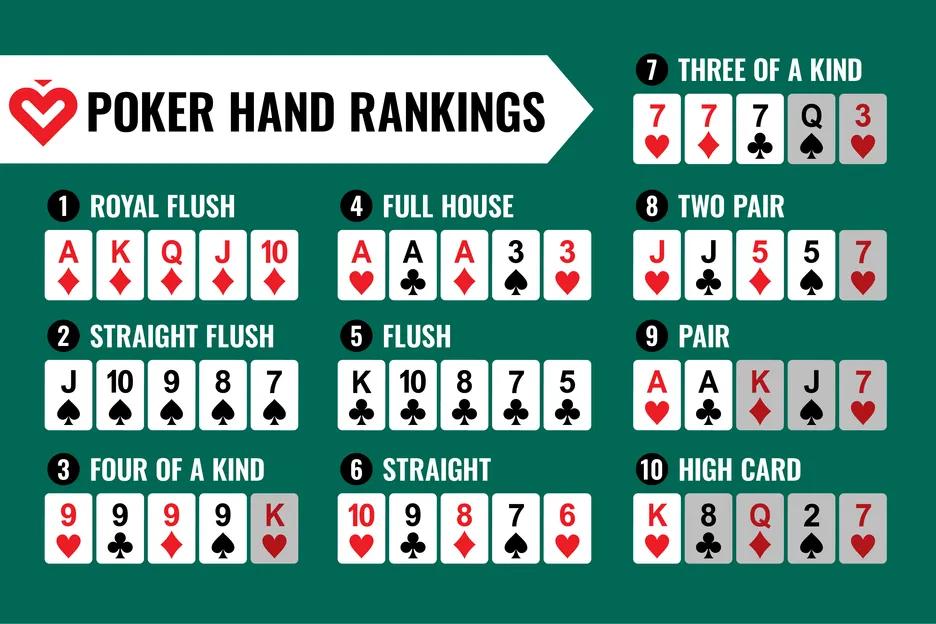
1. Hand Rankings (From Best to Worst)
Knowing hand rankings is fundamental for any poker game rules guide.
- Royal Flush: A, K, Q, J, 10, all of the same suit.
- Straight Flush: Five consecutive cards of the same suit.
- Four of a Kind: Four cards of the same rank.
- Full House: Three of a kind + a pair.
- Flush: Five cards of the same suit, not in sequence.
- Straight: Five consecutive cards of mixed suits.
- Three of a Kind: Three cards of the same rank.
- Two Pair: Two pairs of different ranks.
- One Pair: Two cards of the same rank.
- High Card: The highest single card if no combinations are made.
2. Betting Rounds
Understanding betting rounds is a key part of any poker game rules guide.
- Pre-Flop: After hole cards are dealt.
- Flop: After the first three community cards.
- Turn: After the fourth community card.
- River: After the fifth community card.
In Stud Poker, betting rounds occur after specific card deals (e.g., third street, fourth street, etc.).
3. Betting Actions
These are the standard actions players can take during a betting round:
- Check: Pass the action to the next player without betting.
- Bet: Place chips into the pot.
- Call: Match the current bet.
- Raise: Increase the size of the current bet.
- Fold: Discard your hand and forfeit the pot.
4. Blinds and Antes
These are mandatory bets that initiate the pot in many poker variants:
- Blinds: Mandatory bets posted by two players (small blind and big blind) before cards are dealt, mainly in Texas Hold’em and Omaha.
- Antes: A small forced bet paid by all players before the round begins, commonly used in Stud games.
5. The Showdown
The showdown is the final stage where remaining players reveal their hands to determine the winner. If only one player remains after all betting rounds, they win the pot without having to show their cards.
Conclusion
This poker game rules guide has provided a foundational understanding of what is poker, its main variations, and the essential rules. Whether you’re interested in mastering Texas Hold’em rules, exploring an Omaha poker guide, or simply want to learn to play poker, the information here will set you on the right path. Remember that practice and experience are key to becoming a skilled poker player.









Reviews
There are no reviews yet.